Fayetteville NC Demographics 2025: Latest Population, Diversity, Income, Age & More
Discover the vibrant, military-influenced demographics of Fayetteville, North Carolina. Updated with 2024 U.S. Census data.
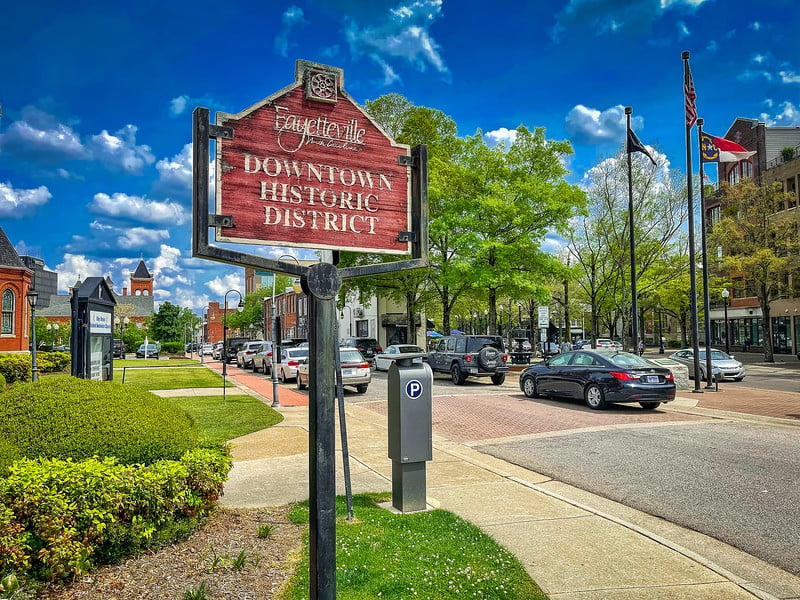
Fayetteville, North Carolina, is a dynamic city in Cumberland County with a rich history and a unique demographic profile shaped heavily by its proximity to Fort Bragg, one of the largest U.S. military installations. Whether you’re a potential resident, business owner, real estate investor, or marketer, understanding Fayetteville NC demographics is key to making informed decisions.
In this comprehensive guide, we break down the latest official data from the U.S. Census Bureau (2020–2024 American Community Survey and July 2024 population estimates). From population trends to racial diversity, income levels, and education, here’s everything you need to know about the demographics of Fayetteville, North Carolina.
Population Overview and Growth Trends
As of the latest U.S. Census Bureau estimate for July 1, 2024, Fayetteville’s population stands at 209,496. This marks a modest 0.5% increase from the 2020 Census figure of 208,501.35
-
2020 Census: 208,501
-
2024 Estimate: 209,496
-
Land area: 148.26 square miles
-
Population density: Approximately 1,413 people per square mile
Projections suggest the population will remain relatively stable around 208,000–211,000 through 2026, with minor fluctuations typical of military communities where personnel rotations impact numbers. Fayetteville ranks as the 6th most populous city in North Carolina.
Age Distribution: A Young, Energetic Community
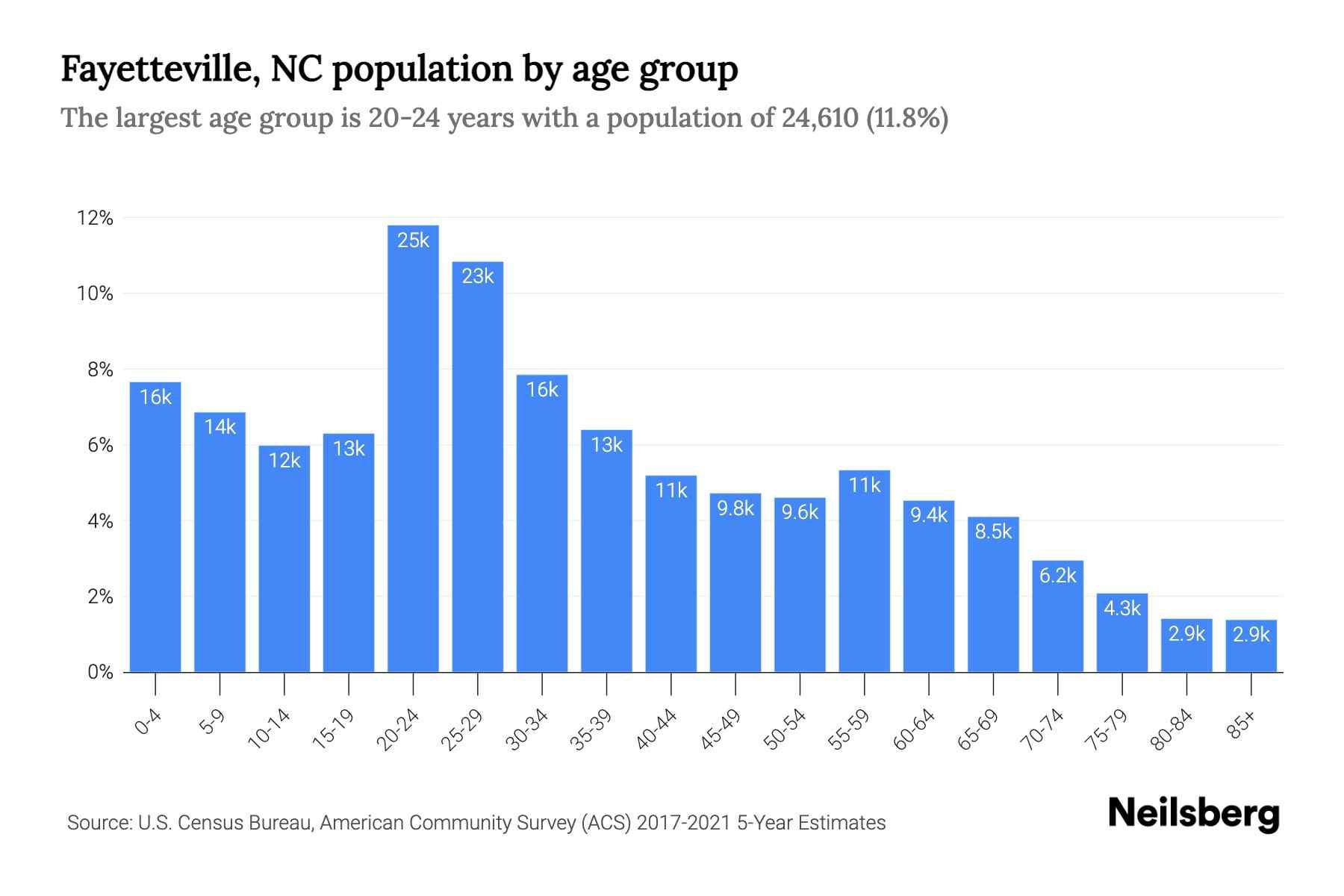
One of the most striking features of Fayetteville NC demographics is its youthful population. The median age is just 30.6 years — significantly younger than the national median of about 39 years and North Carolina’s average
-
Under 18 years: 23.8%
-
Under 5 years: 7.6%
-
65 years and over: 12.9%
The large 20–34 age groups reflect the strong presence of active-duty military personnel, young families, and students from local institutions like Fayetteville State University and Fayetteville Technical Community College
Gender breakdown: 50.7% male and 49.3% female — a slight male skew common in military-heavy areas.
Racial and Ethnic Diversity
Fayetteville is one of North Carolina’s most diverse cities. The racial and ethnic makeup reflects its military roots and Southern location.
Key 2024 breakdown (non-Hispanic unless noted)
| Race/Ethnicity | Percentage | Approximate Population |
|---|---|---|
| Black or African American | 42.6% | ~89,000 |
| White (non-Hispanic) | 34.2% | ~72,000 |
| Hispanic or Latino (any race) | 13.1% | ~27,600 |
| Two or More Races | 12.1% | ~25,500 |
| Asian | 3.1% | ~6,500 |
| American Indian/Alaska Native | 0.9% | ~1,900 |
| Native Hawaiian/Pacific Islander | 0.4% | ~800 |
This diversity creates a rich cultural tapestry, with influences from military families stationed worldwide.
Household Income, Poverty, and Economy
Median household income (2020–2024): $58,407
Per capita income: $32,728
While income is below the national average, it has shown steady growth (3.57% in the most recent year tracked). The poverty rate is 17.7%, higher than the U.S. average of ~12.5%, partly due to the transient nature of military families and younger demographics.
Top industries include healthcare, retail trade, educational services, and public administration — all tied to the military, universities, and local services. Average commute time is a short 19.1 minutes, thanks to the compact layout.
Education Levels
Fayetteville residents are well-educated overall:
-
High school graduate or higher (age 25+): 93.5%
-
Bachelor’s degree or higher (age 25+): 29.0%
Local institutions contribute significantly to educational attainment and workforce development.
Housing and Family Structure
-
Owner-occupied housing rate: 47.4% (lower than national average, reflecting rental demand from military families)
-
Median home value: $188,000
-
Median gross rent: $1,250
-
Households: ~82,689
-
Persons per household: 2.36
The housing market remains relatively affordable compared to larger North Carolina metros like Raleigh or Charlotte.
The Military Influence on Fayetteville Demographics
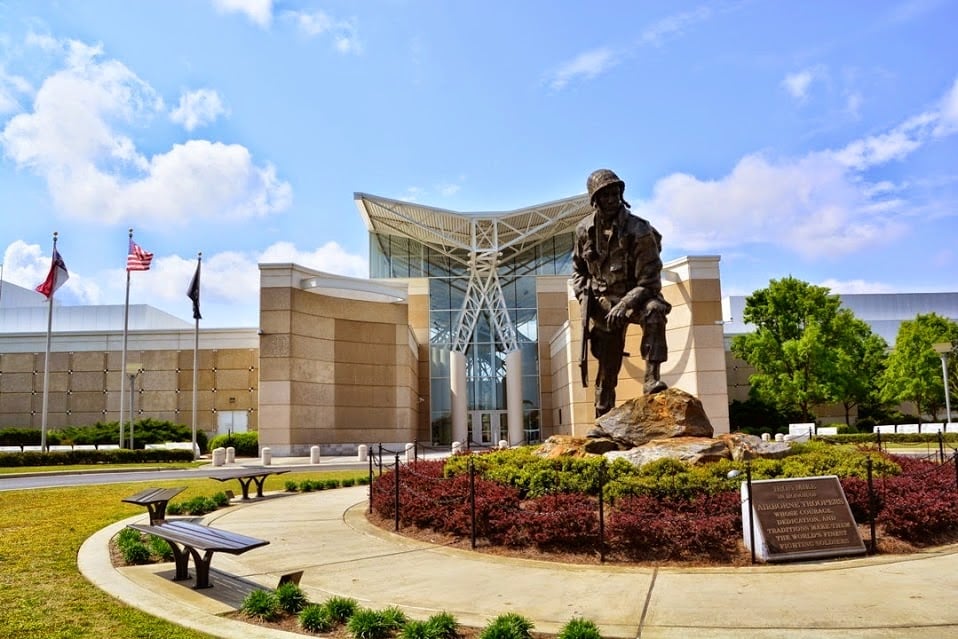
No discussion of Fayetteville NC demographics is complete without highlighting Fort Liberty. With tens of thousands of active-duty soldiers, civilians, and veterans (over 24,500 veterans live in the city), the base drives much of the city’s youthful, diverse, and transient population.36
Military service members and their families bring global perspectives, boosting diversity in race, ethnicity, and languages spoken at home (14.2% of residents speak a language other than English).

This influence also affects economics: stable federal employment, but higher mobility leads to unique housing and service demands.
How Fayetteville Compares to North Carolina and the U.S.
-
Younger and more diverse than both state and national averages.
-
Lower homeownership but more affordable housing.
-
Higher poverty rate but strong job sectors tied to government and healthcare.
-
Shorter commutes and high computer/internet access (95% of households have computers).
Why Fayetteville’s Demographics Matter
Whether you’re relocating for military service, starting a business, or investing in real estate, Fayetteville’s young, diverse, and military-driven demographics create exciting opportunities. The city offers a blend of Southern charm, cultural vibrancy, and economic stability.
Sources: U.S. Census Bureau QuickFacts, Data USA, World Population Review (2024–2025 data). All figures are the most recent available as of 2025. Demographics can shift with new census releases, so check census.gov for the absolute latest.
Ready to experience Fayetteville? The city’s demographics tell the story of a welcoming, forward-moving community that continues to evolve.
👉Check out my other blog on things to do in Fayetteville, NC
📍 EXPLORE MORE WITH ALEXIZZY.COM
Looking for homes, investment properties, or Airbnb opportunities in Fayetteville and surrounding areas?
👉 Visit AlexIzzy.com or Alexizzyrealtor.com for local insights, listings, and expert guidance.